If you want to learn to build your own guitar, the fastest way is to do it beside someone who builds them for a living. Guitar Kit World supports in-person build workshops around the world, each one run by an independent luthier in their own shop or makerspace. In Baltimore, Maryland, the workshops are organized and taught by two of them: Ohad Barbibay and Matt Rector.
Meet Your Instructors
Ohad Barbibay runs Barbibay Guitars and Pickups in Baltimore. He came into the trade through a 12 hour setup class in early 2016, got hooked in the first hour, and signed up to the Algranati Guitar Making School in Ramat Hasharon, Israel, where he studied building and repair for a year. Two years at a shop in Tel Aviv followed, then five years with Trevor Healy at Healy Guitars in Easthampton, Massachusetts, from 2019 to 2024. He picked up pickup winding during the pandemic, and it grew into its own line. He moved his family to Baltimore in the summer of 2024 and now runs his own shop, doing custom builds, full repair work, and hand wound guitar and bass pickups, including his own signature A90.
That last part is worth pausing on. Most builders buy their electronics in. Ohad winds his by hand, sells them at regional shows, and supplies other working luthiers with them, Kalimar Maia in Fairfax among them. When a student asks why a pickup sounds the way it does, the answer comes from someone who has wound one.
Matt Rector is the luthier behind Rector Guitars and Ukuleles, also based in Baltimore. He is a woodworker and a musician as well as a builder, and he co-hosts the In Tune podcast, which is a useful tell: he is someone who thinks out loud about the craft and the business of making things, not just someone who makes them. He co-teaches every session alongside Ohad.
Two working luthiers in one small class is genuinely hard to find, and it is the best thing about this workshop. Here is how Ohad puts it:
"Whether you want a classic 'T' shape or something totally custom, you'll have two professional luthiers standing over your shoulder to ensure a pro-level result."
How Seriously They Take It
A few things happened before the first Baltimore class that tell you more than any bio could.
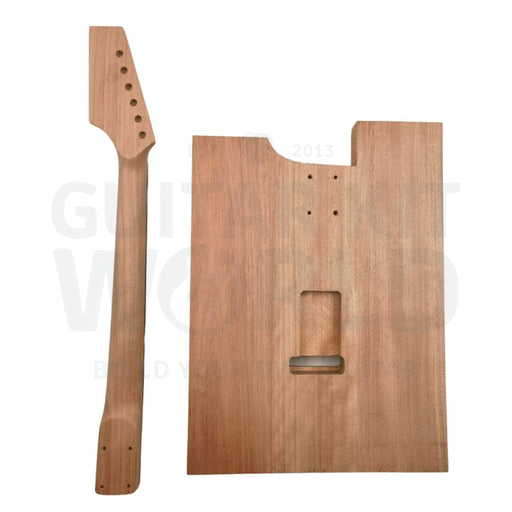
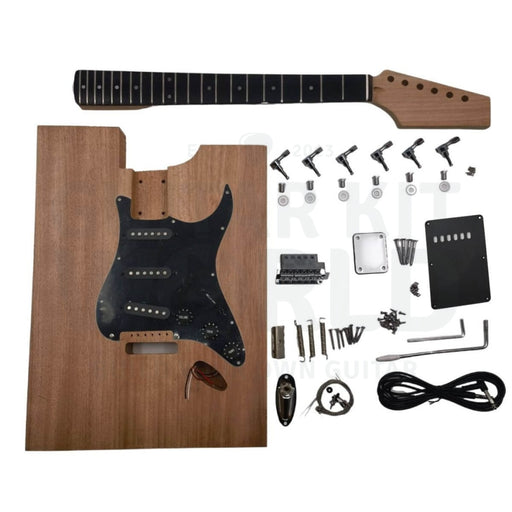
Ohad insisted the kits arrive as uncut rectangular blanks, with the neck pockets and control cavities pre-routed but the body and headstock outlines untouched. His reasoning was simple: this is a building workshop, so the students should cut their own shapes. In his words, "the uncut perimeter is essential."
When the sample kit arrived, he measured it with calipers, found the neck heel and the pocket did not agree to within a few tenths of a millimetre, and told us the cause was routing tolerance rather than the wood moving. He was right, and our own engineering review confirmed it. He also spotted fret ends proud of the fretboard edge and a split pickup bobbin in the same inspection.
Then, before a single student walked in, he built the whole thing through with his co-instructor so they could pace the teaching properly.
He also ran a free open house first, bringing a finished sample guitar and the raw kits so people could handle both and walk through the curriculum week by week before committing to anything.
Past Workshops in Baltimore
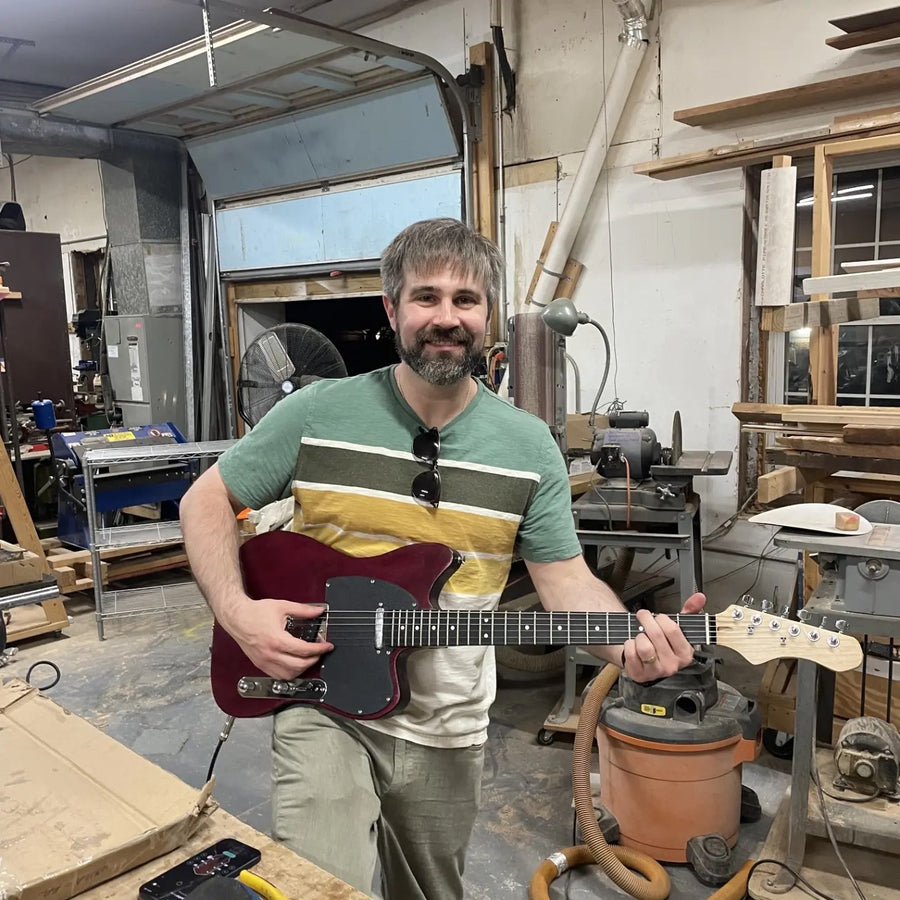
Ohad and Matt ran their first Baltimore workshop this spring at the Baltimore Node Hackerspace. It ended the way you want a build class to end: a finished, playable electric guitar going home with the person who built it.
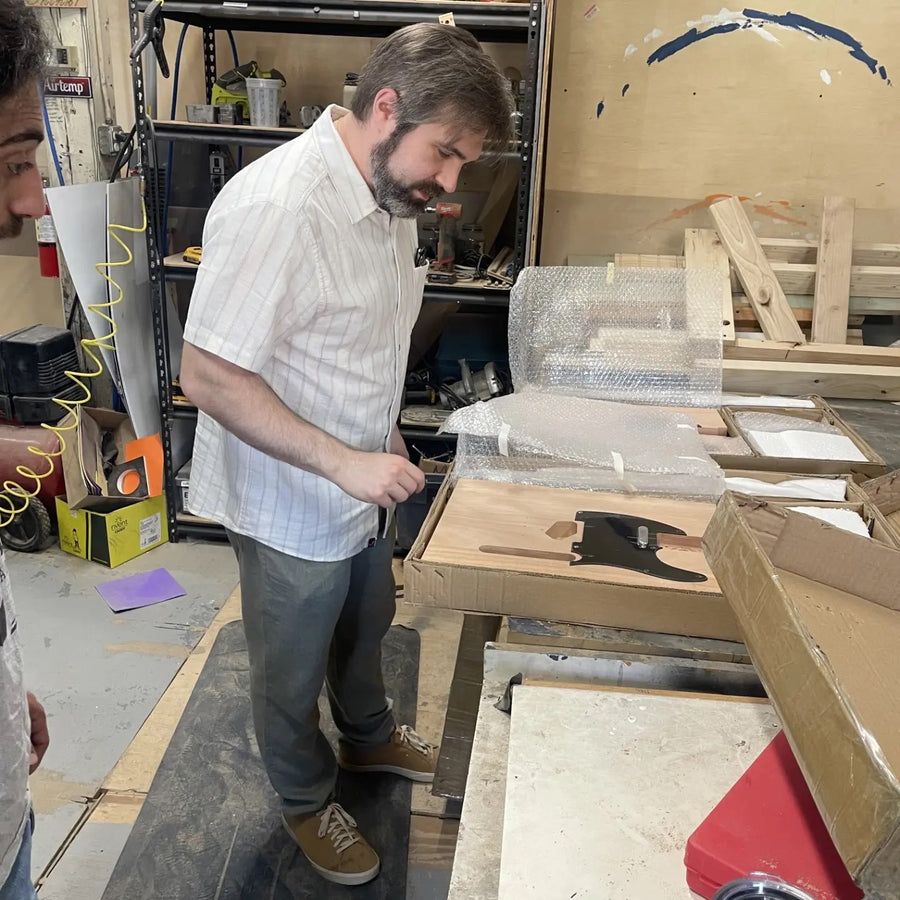
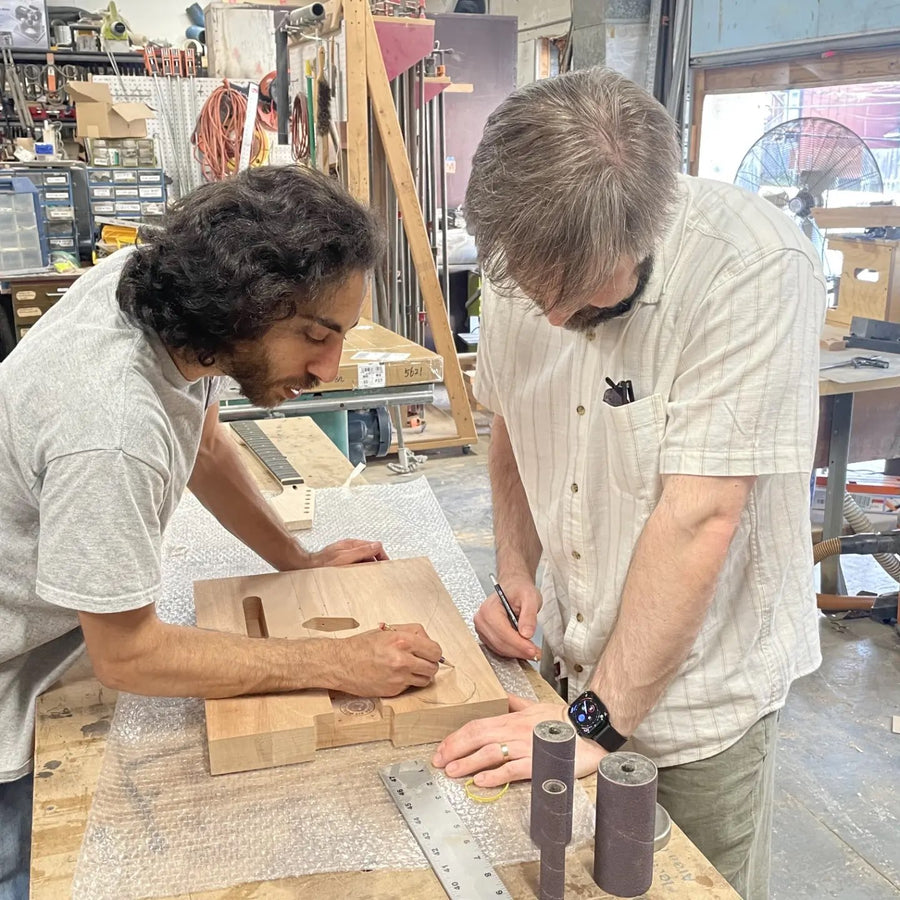
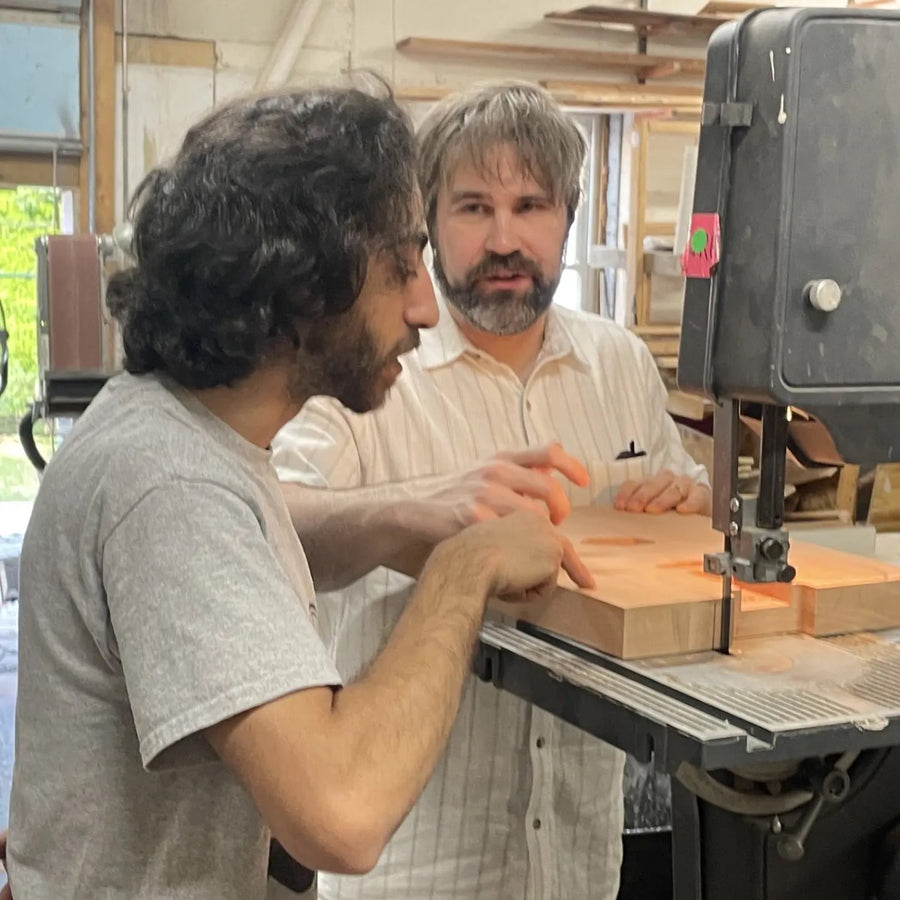
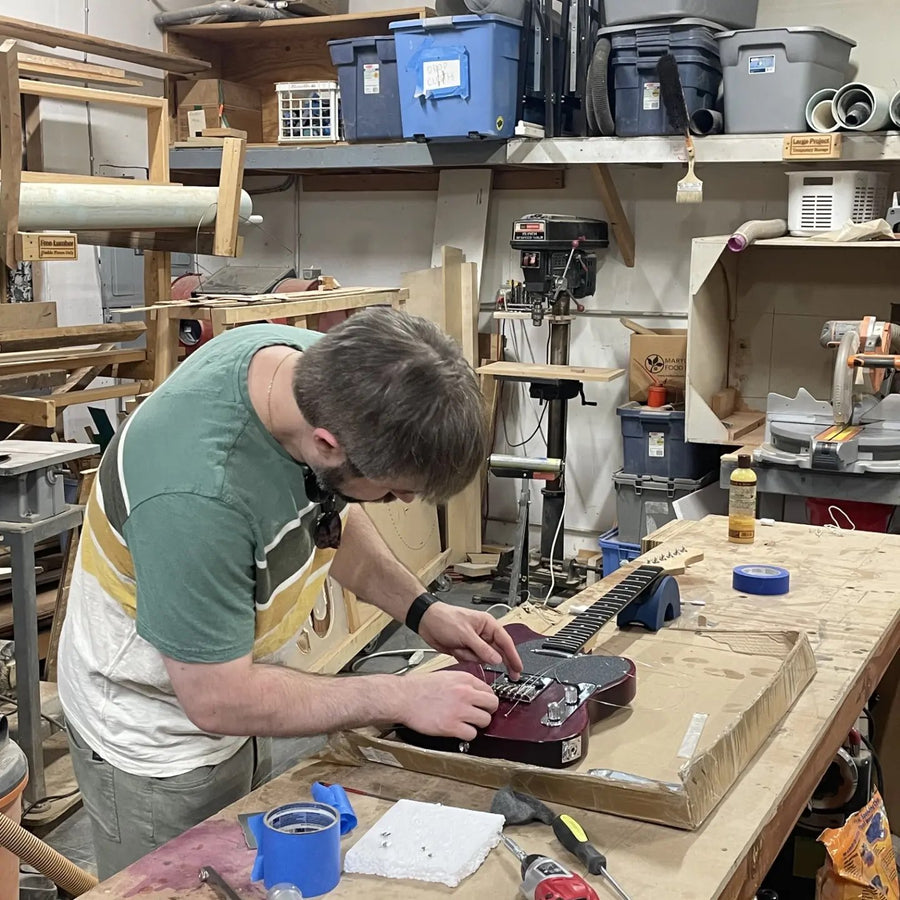
It ran as a dedicated small-group session, so both luthiers were at the bench for every stage. It started with the kit still in the box. From there the work moved to layout, where the neck sits, where the hardware lands, what gets cut away. That is the stage most first-time builders rush and later regret, so it got a pencil, a straightedge, and two sets of eyes. Then the bandsaw, with a luthier calling the cut.
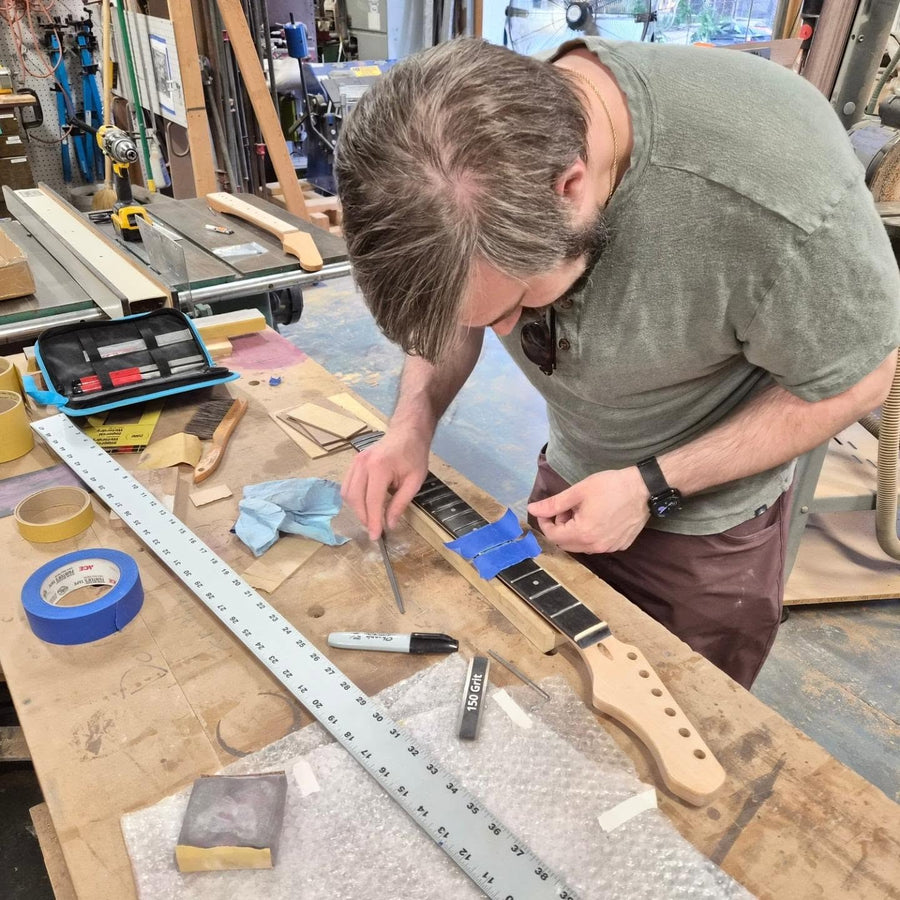
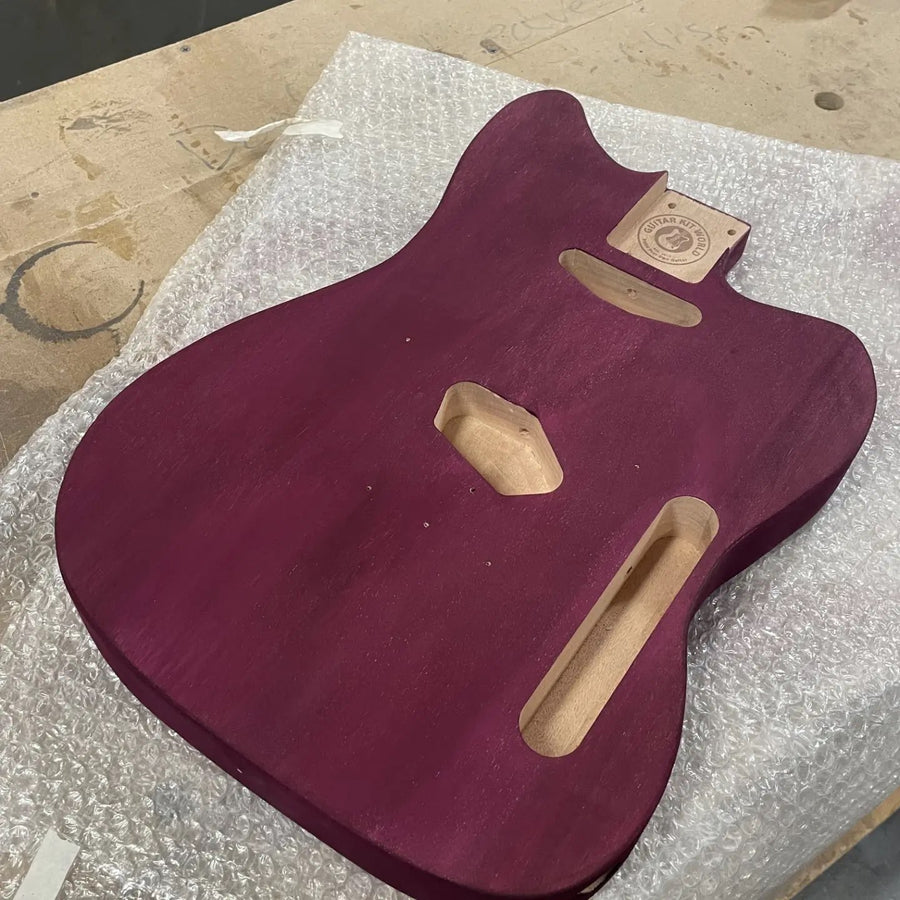
Fretwork came next: frets leveled and crowned with a file, tape masking the fretboard, a straightedge and a sanding block within reach. This is the part that decides whether a guitar plays or buzzes, and it is the hardest thing to learn from a video. Then finish went on the T-style body in a deep purple stain.
Wiring, hardware, then strings, and a final setup, which is where a box of parts becomes an instrument someone actually wants to play.
Images courtesy of Ohad Barbibay and Matt Rector.
"Having a dedicated 2-on-1 setup gave Matt and me the chance to dial in every single step of the process, test our pacing, and figure out how to deliver the best possible hands-on experience at the bench."
They took what they learned from that first run straight back into the program, which is exactly what you want from people who teach the thing they do professionally.
What You Do in the Workshop
The workshop runs over four sessions at a makerspace with real tools and real dust. Across the class you work through:
Unpacking and checking the kit
Laying out the body and marking your cuts
Cutting and shaping
Fret leveling, crowning, and neck work
Finishing
Wiring the electronics
Final setup, so the guitar plays properly before you take it home
You shape and finish your own solid-body electric, assemble the neck, body, and hardware, wire the electronics, and set the guitar up to play, with Ohad and Matt working alongside you at the bench. Builders in the first Baltimore session went home with a finished, playable instrument.
Join the Next Baltimore Workshop
Ohad and Matt organize these workshops themselves and set the schedule, the class size, and everything that comes with them. Dates for the next one are posted on the Baltimore page in our community, along with anything they add as it gets closer.
You can comment there to ask a question, say you are interested, or post progress from your own build once you have started. You can also message @barbibayguitars or @rectorguitars directly on Instagram. Both are working luthiers and they answer their own messages.
Do Not See Your City?
Baltimore is one of several cities where an independent luthier runs these workshops, and the list grows when builders ask for it. Tell us where you are on the workshops board. If you would like to host one, or you know a luthier or makerspace in your area who should, say so there too. That is the single fastest way to get a workshop organized in your city.
No. The class is built for first-timers and it is guided at every stage by two luthiers. Tell Ohad and Matt your experience level when you get in touch and they will tell you straight whether it fits.
Do I need my own tools?
The workshop runs at a makerspace equipped for this kind of work, and the first build used the bandsaw, files, and bench tools on site. Confirm what is provided and what to bring with Ohad and Matt before the class starts.
What do I take home?
An electric guitar you shaped, finished, wired, and set up yourself, with two luthiers at the bench with you.
What does it cost, and what is included?
Ohad and Matt set the price, the class size, and what is provided, and they confirm all of it when you register.
I play left-handed. Can I join?
Ask as early as you can. Left-handed blank kits are not always in stock and can take several weeks to produce, so it needs arranging well before the class starts.
Does Guitar Kit World run this workshop?
No. Ohad and Matt own it: registration, payment, scheduling, and everything that happens in the room. We supply the kits and help spread the word.
Building on Your Own Instead?
You do not need a class to start. Every stage above is something you can do at your own bench. For the full shape-it-yourself experience the Baltimore builders got, start with a blank guitar kit and take it from raw wood. To begin with the wiring and setup instead, a beginner kit is the shorter road, and our in-stock kits ship worldwide. Before buying tools you do not need, read which luthier tools actually matter for a kit build.
Near Fairfax, VA instead? Kalimar Maia runs hands-on build workshops at Nova Labs there. Read the Fairfax workshop write-up.
Finishing is the one guitar-building step you cannot undo. So Steve Madden practiced on six plywood bodies first, then gave his quilted maple kit five thin coats of Tru-Oil. Here is his method, and how he fixed the binding when it turned yellow.
Doug DeLuca and his sixteen year old son turned a bare quilted maple top into a deep blue burst, and the figure still reads through the darkest part of the rim. Here is the dye versus pigment decision that made it work, why the edges are the darkest part of the guitar, and what you can copy on your own figured top.
Christoph and his son Fionn wanted a deep even black on an open-grained mahogany body with the figure still showing through, and the pores kept drying lighter than the surface. Follow the build from the bare kit to the finished bass, and see how they diagnosed it and what you can copy from their approach.

 Nazarine Artis