










Looking for a Specific Guitar Kit?
Type in a model or style to see what’s available.
A 7-string guitar gives you that extra low range that standard 6-string guitars cannot reach. The added seventh string, typically tuned to B below the low E, opens up deep, heavy riffs and extended chord voicings that define modern metal, djent, and progressive music.
Our 7-string guitar kits are designed for players who want extended range without buying a production guitar at a markup. Each kit comes with a wider neck and nut to accommodate the extra string, a body routed for high-output pickups, and hardware sized for 7-string spacing.
Building a 7-string kit is similar to a standard 6-string build with a few extra considerations. The wider neck needs careful setup to get the action even across all seven strings, and intonation takes a bit more patience. But if you have built a 6-string kit before, the skills transfer directly.
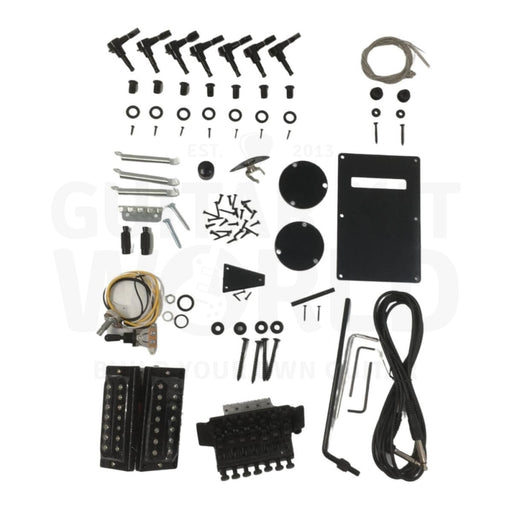
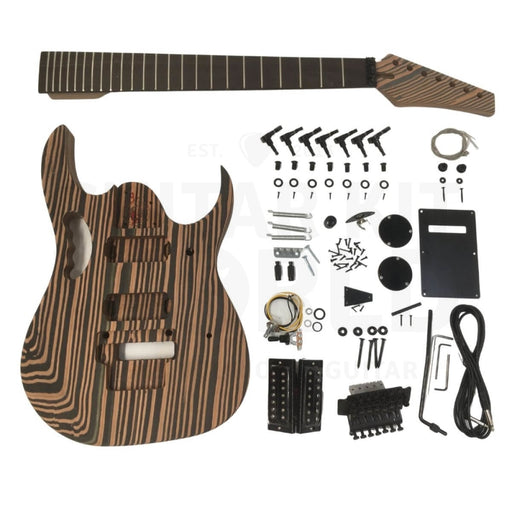
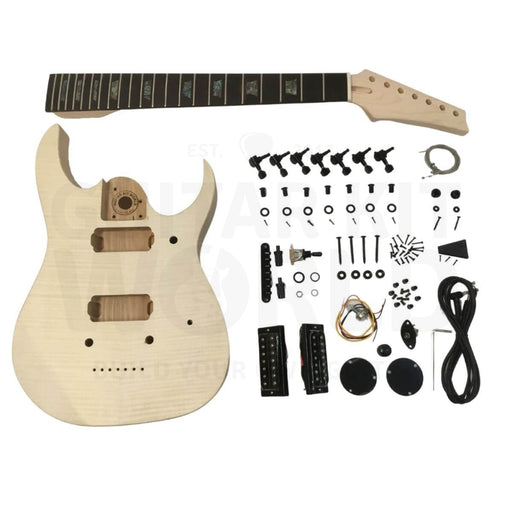
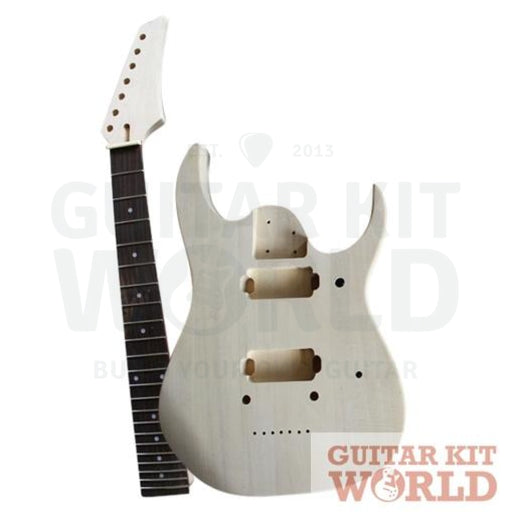
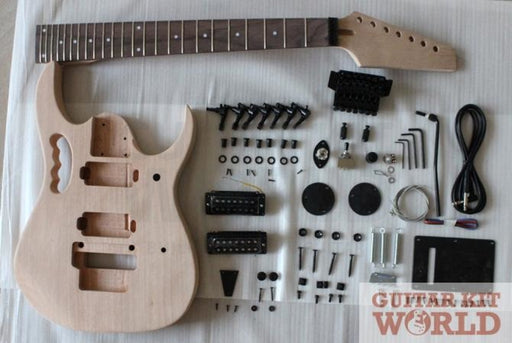
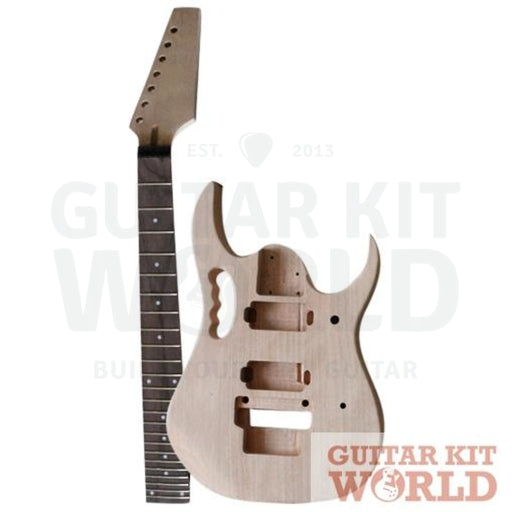
Every kit includes a pre-shaped body and neck, 7-string bridge, tuners, pickups, and all electronics. Pick your body style and start building.
Full Specifications General Dexterity: Right-Handed Number of Strings: 7 Size: Full Size Build Difficulty: Intermediate (5/10) Basswood is a...
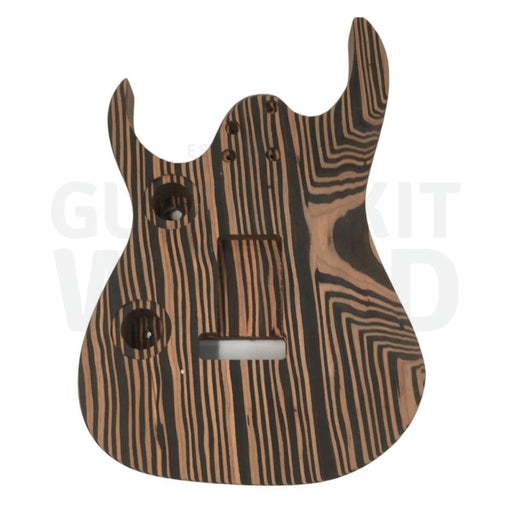
View full detailsBuild your own 7-string DIY guitar using this JE-style guitar kit with 7-string Stripewood (Reconstituted Wood) body and ebonized fretboard. Stripe...
View full detailsBuild your own JBM 7 String Guitar with Ebonized Fretboard using this DIY kit. Stripewood is our name for this wood. The factory dyes thin sheets ...
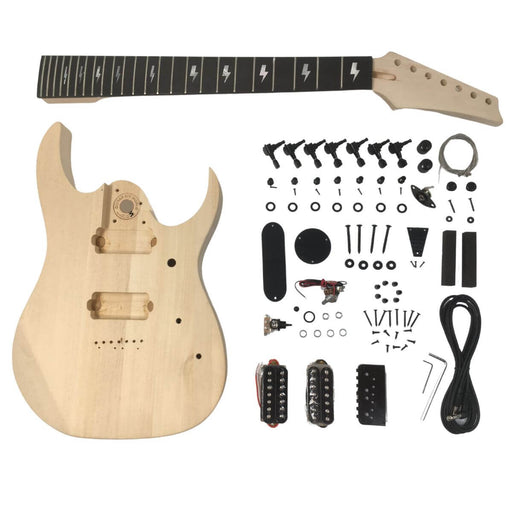
View full detailsBuild your own 7-string basswood body kit guitar with ebonized fretboard and cool lightning bolt inlays. Full Specifications General Dexterity:...
View full detailsBuild your own 7-string Mahogany JBM-style Guitar with Mahogany Neck and Rosewood Fretboard using our DIY Guitar Kit. Full Specifications General ...
View full detailsBuild your own 7-string DIY guitar using this DIY guitar kit with a mahogany body & set-in mahogany neck, rosewood fretboard, and trapezoid whi...
View full detailsBuild your own 7-string hollow guitar kit with a mahogany body, ebonized fretboard, F-holes, and Florentine-style single cutaway. Full Specificatio...
View full detailsFeaturing a right-handed, maple bolt-on neck, and a flame maple top on a solid ash body, you'll not only satisfy your inner craftsman, but you'll a...
View full detailsDescription Body Type: Solid Neck Shape: C-shaped Number of Frets: 22 Fret Wire: Stainless Steel Fret Size: Medium Jumbo Fretboard Ra...
View full detailsDescription Body type: Solid Neck Shape: C-shaped Number of Frets: 24 Fret Wire: Stainless Steel Fret Size: Medium Jumbo Fretboard Ra...
View full detailsBuild your own custom shop 7-string JBM-style guitar. Description Neck Joint: Bolt-on Neck Nut: Locking Nut Neck Shape: C-shaped No...
View full detailsUnleash your creativity with the Hookline 7-String Guitar Kit! Build your dream guitar with customizable bodies, necks, timber, and hand-orientatio...
View full detailsL-style 7-string guitars expand your range when it comes to available chord voicings and tunings allowing you to play seriously down-tuned riffs wh...
View full detailsA wider nut accommodates seven strings with comfortable spacing, so check that the nut width matches your hand size.
Longer scale lengths (26.5 inches or more) keep the low B string tight and defined, preventing a muddy tone.
High-output humbuckers are essential for 7-string guitars to keep the low end focused under high gain.
A fixed bridge is easier to set up and intonate on a 7-string. Tremolo bridges add complexity on extended-range instruments.
The build process is nearly identical. The main difference is setup: a 7-string needs more careful intonation and truss rod adjustment because of the wider neck and extra string tension. Budget extra time for the final setup.
Standard 7-string tuning is B-E-A-D-G-B-E, adding a low B below the standard 6-string tuning. Many players also drop the low B to A for even heavier tones.
Absolutely. The top six strings are tuned the same as a standard guitar. You just have an extra low string available when you want it. The wider neck takes a short adjustment period, but most players adapt within a week.
Type in a model or style to see what’s available.