
Looking for a Specific Guitar Kit?
Type in a model or style to see what’s available.
Our S-style guitar kits are the most popular build in the catalog, and for good reason. The double cutaway body shape is comfortable, the three single coil pickups cover everything from clean sparkle to bluesy grit, and the bolt-on neck makes this one of the easiest kits to assemble.
The S-style design has been a workhorse since the 1950s. It sits well on a strap, balances on your knee, and gives you full access to the upper frets thanks to the contoured body and deep cutaways. Our kits capture all of that playability.
Each S-style kit includes a contoured solid body, a maple neck with your choice of fretboard wood, three single coil pickups, a five-way selector switch, a tremolo bridge, tuning machines, and all wiring components. The tremolo system lets you add vibrato effects right out of the build. This is an ideal first kit for new builders and a great platform for experienced players who want to experiment with pickup swaps, custom wiring, or unique finishes.
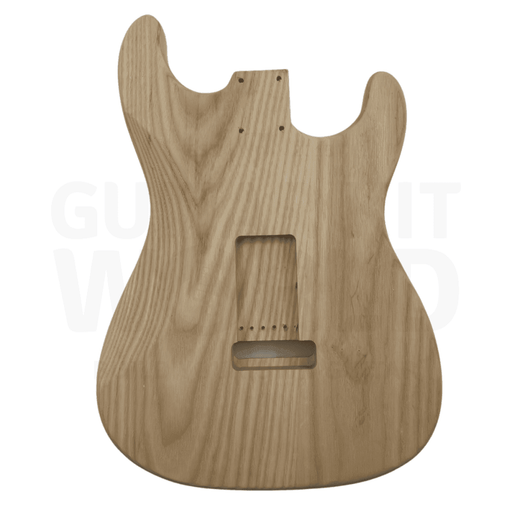
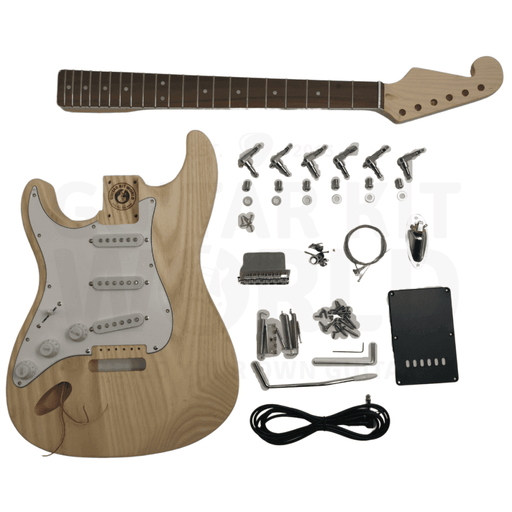
Build your own DIY left-handed Ash body ST style guitar with a bolt-on neck and rosewood fretboard. Specifications Body type: Solid Hand Orientat...
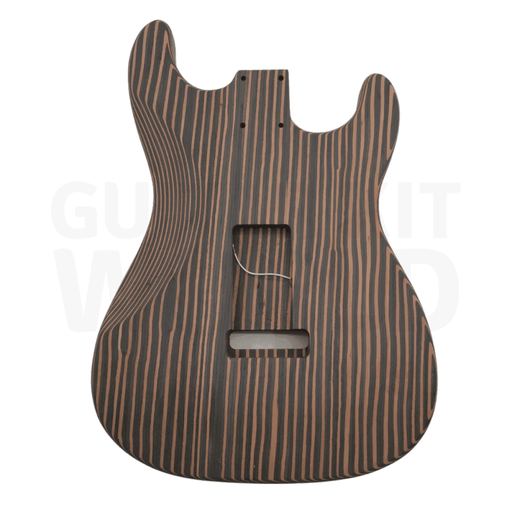
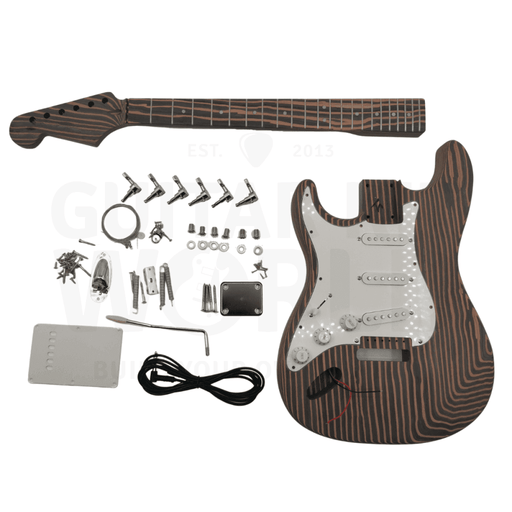
View full detailsBuild your own left-handed DIY guitar with this beautiful zebrawood ST style kit. You can find ST-style guitar building instructions here: ST Gui...
View full detailsStandard S-style kits run three single coils with a five-way switch, but some variants offer a humbucker in the bridge position for more output and less hum.
Most S-style kits include a six-screw tremolo bridge. Proper spring tension setup is key to keeping the guitar in tune when using the whammy bar.
Maple fretboards feel snappier and brighter, while rosewood or similar dark fretboards tend to be warmer and smoother under the fingers.
A proper S-style body has a belly cut on the back and a forearm contour on the front. These make long playing sessions much more comfortable.
The S-style covers a huge range. The single coil pickups excel at clean tones, country twang, funk, blues, and classic rock. With a humbucker bridge option, you can push into heavier territory too.
It takes some patience but is not difficult. You balance the spring tension against the string pull until the bridge sits flat or floats slightly. Our setup guide walks you through the process step by step.
Yes. Many builders place a wood block behind the tremolo block to prevent it from moving. This gives you a hardtail feel with rock-solid tuning while keeping the option to unblock it later.
Our S-style kits use a 25.5 inch scale length. This gives you slightly higher string tension and a brighter, snappier feel compared to shorter scale guitars.
Depending on the type of guitar you buy you may only require tools and materials for finishing the guitar (painting) and soldering.
Screwdrivers, sandpaper and sanding block. Finishing supplies e.g. paint, stain, and clear gloss, ventilation mask, coping saw or jigsaw if shaping the headstock.
With this small list of inexpensive tools, you will be up and running and ready to build your electric guitar in no time.
Recommended reading: Luthier Tools for DIY Guitar Kits.
Our stock kits contain all necessary parts (unless stated otherwise on the product page).
It depends on the choice of finish. For instance, when you paint or stain a guitar you will need the surface to dry and harden (cure). This can take anywhere from 1 week to 3 months depending on your choice of finishing product.
You will find the guitar dries to approximately 90% very quickly but the final 10% takes some time. If you can't wait that long you could try tung oil or wax finish but bear in mind the finish won't be as durable and protect the guitar as effectively.
Most of our kits require basic soldering. If you're new to it, check out our wiring guide here.
If you don't want to solder, or don't have the tools, our solderless guitar kits use plug-and-play wiring. No iron required.
You can use stain, paint, or oil-based finishes. Learn more about finishing techniques here.
Our advice: use a reference. In most cases, this will be a guitar you particularly like the look of and want to create something similar.
To view the latest DIY guitars from our community follow us on Instagram and visit our Customer Reviews page.
It's defined firstly by the components you use and secondly the workmanship that goes into putting it all together.
Watch the community section of our YouTube channel to learn how kit guitars sound.
Type in a model or style to see what’s available.