





Looking for a Specific Guitar Kit?
Type in a model or style to see what’s available.
If you have never built a guitar before, start here. Our beginner guitar kits are selected for straightforward construction, simple wiring, and forgiving assembly that does not require prior woodworking experience.
Every beginner kit uses bolt-on neck construction, which is the easiest joint type to get right. You align the neck in the pocket, drill pilot holes, and drive four screws. The body and neck come pre-shaped, so there is no carving or major woodwork involved. Your main tasks are sanding, finishing, and wiring the electronics.
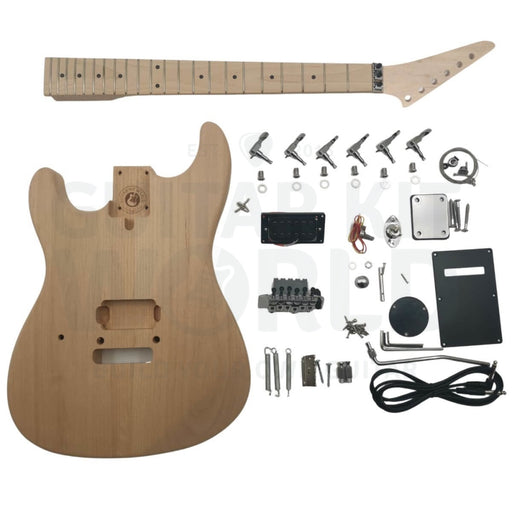
These kits include everything: body, neck, tuners, bridge, pickups, pots, switch, jack, strings, and all the mounting hardware. The only things you need to supply are basic tools (screwdrivers, soldering iron, sandpaper) and your choice of finish.
Building your first guitar kit typically takes a weekend for the assembly and wiring, plus additional time for finishing depending on the method you choose. Oil finishes can be done in a day. Spray finishes take longer with drying and sanding between coats. Either way, you end up with a playable instrument and a solid understanding of how guitars work.
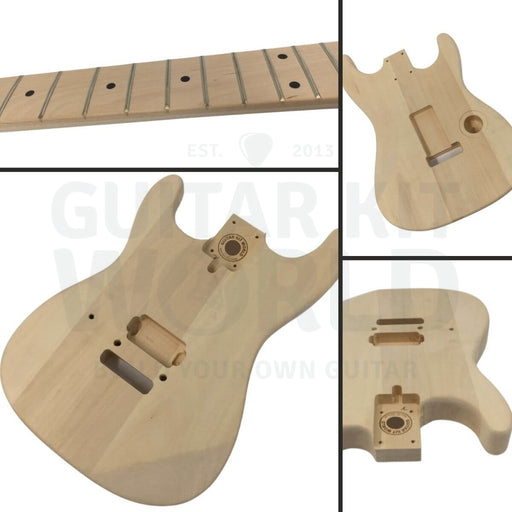
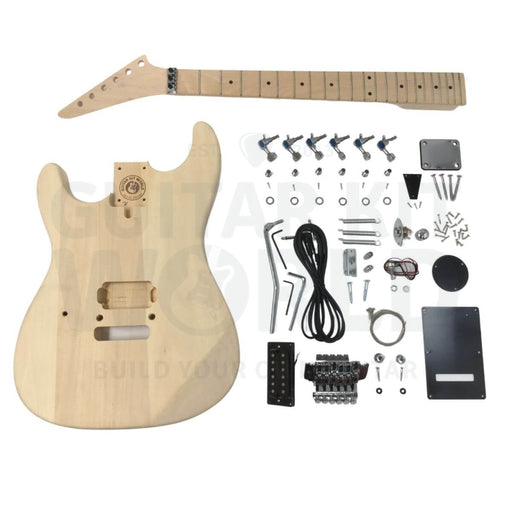
Build your own left-handed ST-style electric guitar with this high-quality DIY guitar kit, designed for smooth playability and classic tone. Featur...
View full detailsBuild your own Lefty Basswood body K-style Guitar Kit with Maple Fretboard using our DIY Guitar Kits. Specifications Hand Orientation: Left-Hand ...
View full detailsA left-handed JM-style bass kit featuring a solid mahogany body with spalted maple veneer and a smooth ebony fretboard. The bolt-on maple neck with...
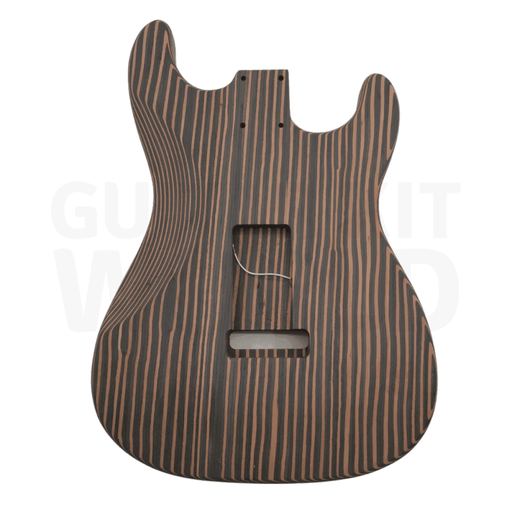
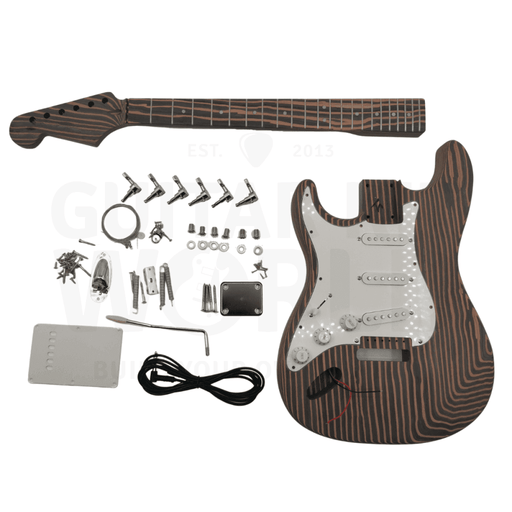
View full detailsBuild your own left-handed DIY guitar with this beautiful zebrawood ST style kit. You can find ST-style guitar building instructions here: ST Gui...
View full detailsBuild your own Lefty Alder body KR-style Guitar Kit with Maple Fretboard using our DIY Guitar Kits. Specifications Hand Orientation: Lefty Heads...
View full detailsBolt-on necks are the easiest to assemble and align, making them ideal for your first build.
Single-pickup or dual-humbucker setups have the simplest wiring, which means fewer chances for mistakes.
S-style and T-style double cutaway bodies are easiest to sand and finish due to their smooth, flowing contours.
Every kit comes with step-by-step instructions covering assembly, wiring, finishing, and setup.
No. Beginner guitar kits come with pre-shaped bodies and necks. You will do sanding, finishing, and assembly, but no cutting, routing, or carving. If you can use a screwdriver and a soldering iron, you can build a guitar kit.
The essentials are sandpaper (220 and 400 grit), a soldering iron with solder, Phillips and flathead screwdrivers, a set of Allen keys, wire cutters, and your chosen finish. A digital tuner and a set of feeler gauges help with the final setup.
Assembly and wiring take about a weekend (8 to 12 hours spread across two days). Finishing time varies: an oil finish can be done in a day, while a spray lacquer finish may need a week or more for coats and curing. Most beginners complete their first build in one to two weekends.
Depending on the type of guitar you buy you may only require tools and materials for finishing the guitar (painting) and soldering.
Screwdrivers, sandpaper and sanding block. Finishing supplies e.g. paint, stain, and clear gloss, ventilation mask, coping saw or jigsaw if shaping the headstock.
With this small list of inexpensive tools, you will be up and running and ready to build your electric guitar in no time.
Recommended reading: Luthier Tools for DIY Guitar Kits.
Our stock kits contain all necessary parts (unless stated otherwise on the product page).
It depends on the choice of finish. For instance, when you paint or stain a guitar you will need the surface to dry and harden (cure). This can take anywhere from 1 week to 3 months depending on your choice of finishing product.
You will find the guitar dries to approximately 90% very quickly but the final 10% takes some time. If you can't wait that long you could try tung oil or wax finish but bear in mind the finish won't be as durable and protect the guitar as effectively.
Most of our kits require basic soldering. If you're new to it, check out our wiring guide here.
If you don't want to solder, or don't have the tools, our solderless guitar kits use plug-and-play wiring. No iron required.
You can use stain, paint, or oil-based finishes. Learn more about finishing techniques here.
Our advice: use a reference. In most cases, this will be a guitar you particularly like the look of and want to create something similar.
To view the latest DIY guitars from our community follow us on Instagram and visit our Customer Reviews page.
It's defined firstly by the components you use and secondly the workmanship that goes into putting it all together.
Watch the community section of our YouTube channel to learn how kit guitars sound.
Type in a model or style to see what’s available.