
Looking for a Specific Guitar Kit?
Type in a model or style to see what’s available.
Maple brings brightness, clarity, and visual impact to a guitar build. As a body wood, maple produces a tight, articulate tone with pronounced attack and clear note separation. Every note in a chord rings out distinctly, making maple an excellent choice for players who value precision and definition.
Our maple guitar kits are available in several body styles, giving you the tonal brightness of maple across different playing configurations. Some kits use a full maple body, while others pair a maple top with a mahogany or basswood back to balance brightness with warmth.
The visual appeal of maple is hard to beat. Figured maple, especially flame and quilted patterns, produces some of the most stunning guitar finishes possible. A clear or lightly tinted finish over figured maple creates a depth and shimmer that draws the eye.
Maple is a dense, hard wood, which means it is heavier than mahogany or basswood. That density is where the brightness and sustain come from, but plan for a guitar that carries some weight. If you want a bright, clear-sounding instrument with show-stopping looks, a maple kit delivers on both fronts.
Description Body Type: Solid Neck Joint: Bolt-on Neck Shape: C-shaped No. of Frets: 22 Scale: 628mm / 24.75" Cutaways: Double ...
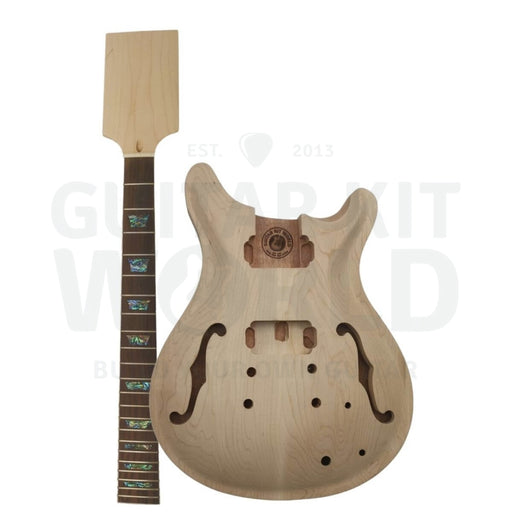
View full detailsBuild your own DIY guitar with this PR-style Custom Shop kit. Description Body type*: Semi-Hollow w/ Solid Maple Cap Neck Shape*: C-shaped...
View full detailsCheck whether the kit uses plain maple, flame maple, or quilted maple. Figured maple costs more but produces dramatic visual effects under a clear finish.
Some kits use a solid maple body, while others pair a maple top with a lighter back wood for reduced weight and tonal balance.
Maple is one of the heaviest tonewoods. A full maple body can be notably heavy, so consider a maple-top kit if weight is a concern.
Figured maple looks best under a clear or tinted transparent finish. Opaque finishes hide the grain pattern and waste the visual potential.
Maple produces a bright, articulate tone with strong attack and clear note definition. It emphasizes upper harmonics and provides tight, controlled low end. Compared to mahogany, maple sounds snappier and more present, with less warmth in the midrange.
Maple is denser and harder than mahogany or basswood, so it takes more effort to sand. It also shows scratches and sanding marks more readily under a clear finish, so take extra care during surface preparation. The payoff is a stunning finished product.
If your kit has figured maple, absolutely. Flame and quilted maple patterns only show their full depth under a transparent finish. A light amber tint enhances the figure even further. Opaque paint hides the grain entirely, so save that for plainer maple blanks.
Type in a model or style to see what’s available.