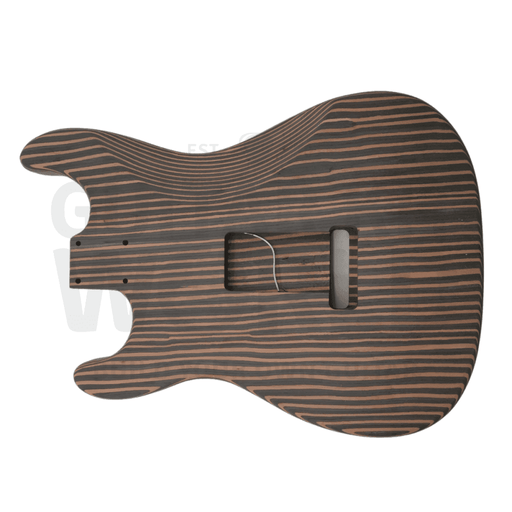
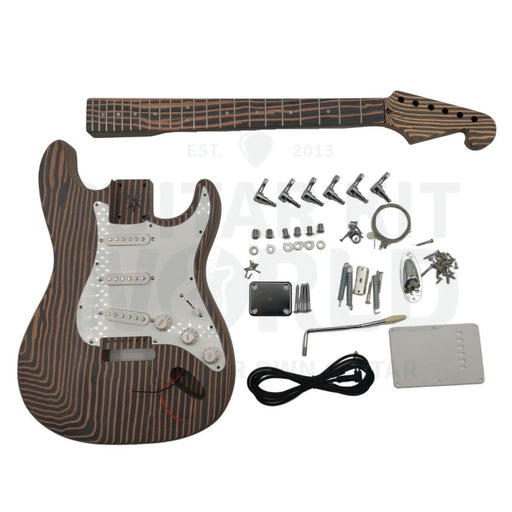
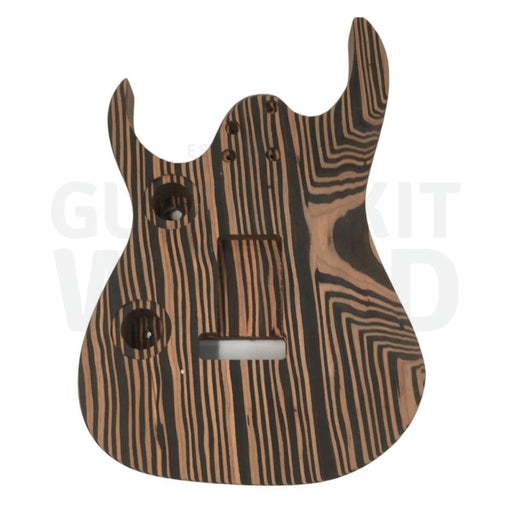
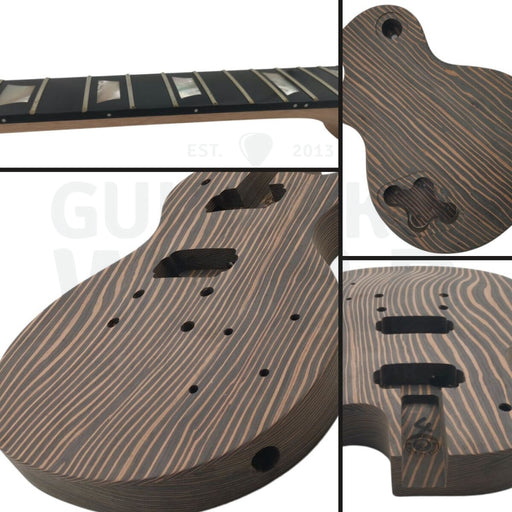
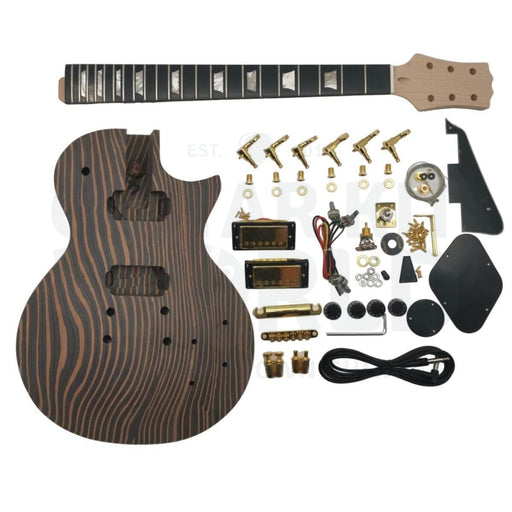
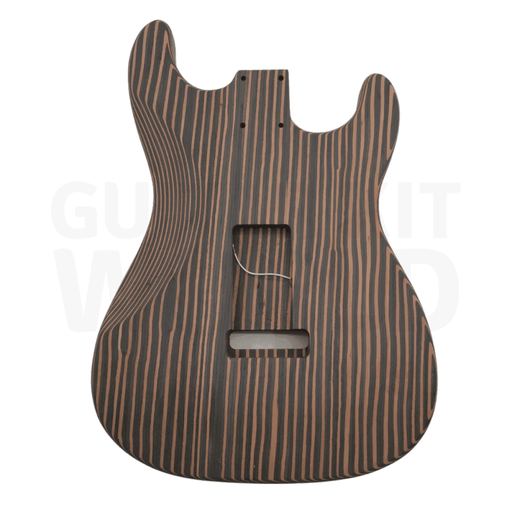
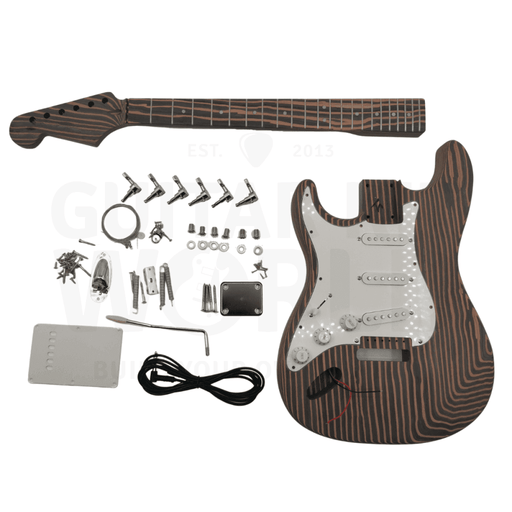
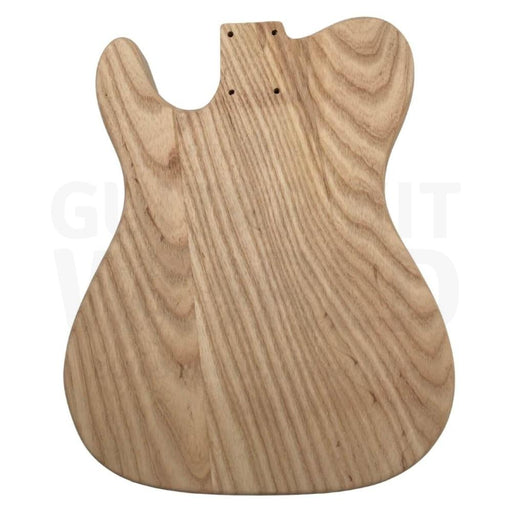
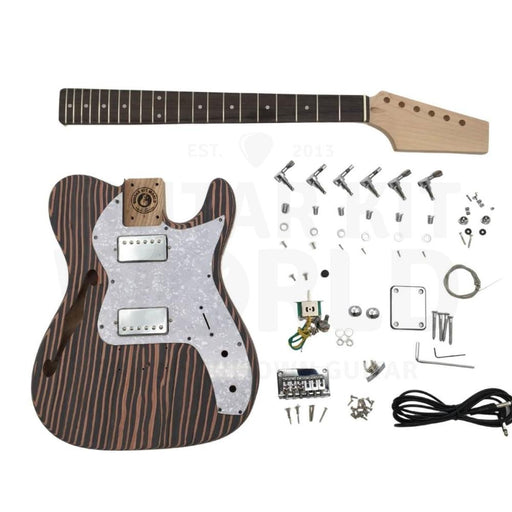
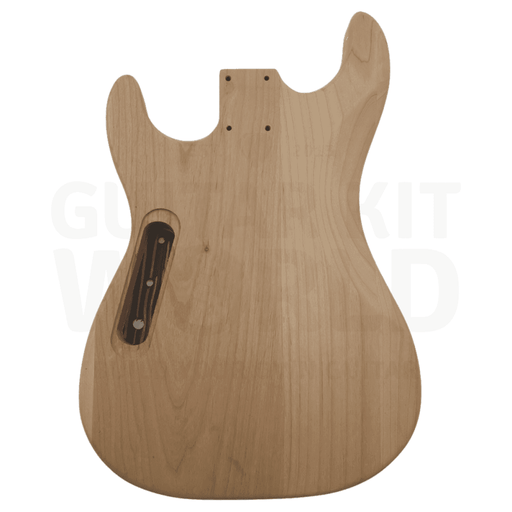
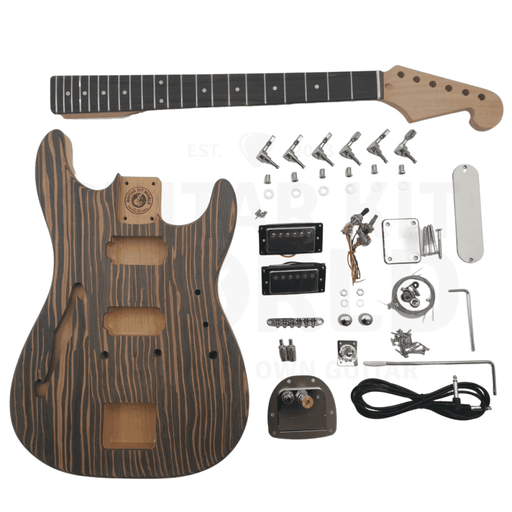
Stripewood is our name for the wood other shops sell as engineered zebrawood. The factory dyes thin sheets of cottonwood, a type of poplar. Then it presses them into a block with heat, glue and pressure.
Anthony Darrus brings the build process to life with his clear, hands-on video series. His tutorials are engaging and practical, offering plenty of tips along the way. If you’re just getting started or want inspiration, we highly recommend watching his build series.
How to finish Stripewood
Test any stain, oil or clear coat on a hidden spot first, like inside a cavity.
There are a few ways to finish it. Some builders sand it until it’s smooth and wipe it with polyurethane. Repeat the process 2 or 3 times and keep sanding in between coats of polyurethane.
Others stain the body a bright color first, then add 2 to 3 coats of clear finish.
The final finish can be glossy or semi-glossy depending on one’s preference and might require more sanding if you want to make it shinier.
Watch How do I POLISH MY GUITAR? To get detailed instructions on how to make your guitar body look shiny.
For safety reasons, we recommend sanding and finishing your guitar in a well ventilated area wearing a respirator mask. You can learn more about safety tips that you need to follow from here: Important Guitar Finishing Safety Tips That You Must Follow.
DIY Guitars by Guitar Kit World Builders
We have a fantastic community of builders who inspire both first-time and experienced musicians to build beautiful and, in most cases, the most unique DIY guitars.
We would love to share pictures of your DIY guitar and your guitar building skills on Guitar Kit World. To feature your DIY project upload images & videos of your guitar to social media and tag us.
Finishing is the one guitar-building step you cannot undo. So Steve Madden practiced on six plywood bodies first, then gave his quilted maple kit five thin coats of Tru-Oil. Here is his method, and how he fixed the binding when it turned yellow.
Doug DeLuca and his sixteen year old son turned a bare quilted maple top into a deep blue burst, and the figure still reads through the darkest part of the rim. Here is the dye versus pigment decision that made it work, why the edges are the darkest part of the guitar, and what you can copy on your own figured top.
Christoph and his son Fionn wanted a deep even black on an open-grained mahogany body with the figure still showing through, and the pores kept drying lighter than the surface. Follow the build from the bare kit to the finished bass, and see how they diagnosed it and what you can copy from their approach.

 Nathan T.